Individual behaviors are a key factor in any team.
Within an organization, the way people communicate, make decisions, handle challenges, collaborate, or avoid confrontation directly impacts the quality of relationships, performance, and ultimately results.
They are also a fundamental aspect of leadership: a leader’s behaviors inevitably shape their leadership style. They determine how power and responsibility are exercised, and how the team is guided toward achieving its goals.
The Crucial Role of Behaviors in Organizations
In short, within the organizational context, individual behaviors play a crucial role from multiple perspectives and often represent one of the main obstacles on the path to success.
And yet, this is sometimes an aspect that tends to go unnoticed—or even ignored.
Even when it is taken into account, it is often underestimated. It is not uncommon for leaders and key people in an organization to be asked to quickly change behaviors considered harmful or limiting, as if this were a simple and straightforward step.
Changing Behaviors Is a Serious Commitment
But the reality is quite different.
Changing a behavior is a serious commitment that requires willingness, consistency, and dedication. A commitment that often extends beyond the individual directly involved, impacting the people around them as well.
The organization itself also plays a fundamental role in this process—both by fostering a culture that supports individual and collective growth, and by creating the right conditions for that growth to happen.
Working on Behaviors
At this point, a natural question arises: how can we work on behaviors in a concrete and lasting way?
For many years, we have been working on these topics as coaches, trainers, and facilitators. Behavior change is one of the areas in which we have developed the most experience, supporting individuals and teams in their development journeys.
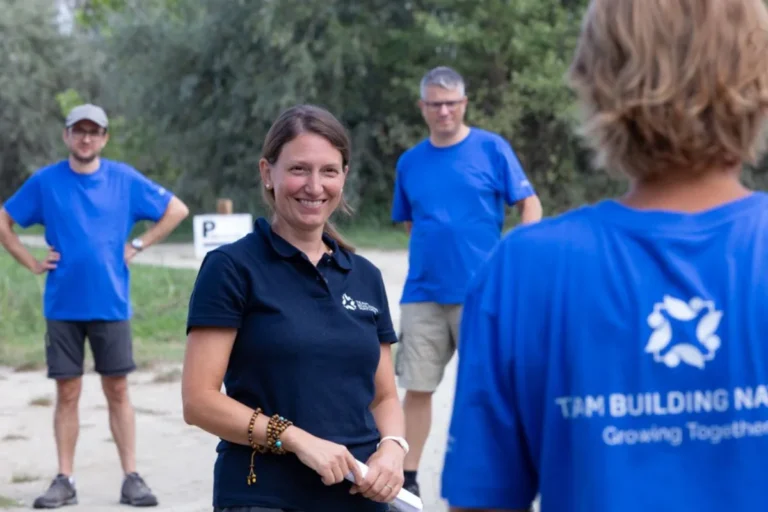
Today, we are convinced that Team Building Natura® is a highly effective tool for working concretely on behaviors—or at least for taking the first steps in this direction.
Let’s explore why, starting from the strong connection between behaviors and the mental models that guide us.

Observing Mental Models
Imagine a snow globe.
One of those glass spheres that contains a small landscape: when you shake it, the snowflakes swirl around, creating the illusion of a heavy snowfall. For a few moments, everything appears chaotic and in motion.
Then, when you set it down, the snow gently begins to settle. Gradually, confusion gives way to stillness. The landscape reappears—clearer, sharper.
Slowing Down to Open Up to New Perspectives
Something very similar happens within you when you give yourself the opportunity to slow down and shift your attention away from the constant flow of thoughts.
When you lower the volume of your inner dialogue and the mental noise begins to fade. When you create space for stillness and encounter that full, meaningful silence that speaks about you.
In that moment, everything becomes clearer.
You can listen to your emotions and sensations. You can observe the mental models that guide you, influence you, and shape your way of being and acting—often without you even realizing it.
An Experience That Transforms
And it is precisely through this observation that you can learn a great deal about yourself. You may even choose to bypass the mental models that usually guide your daily behavior.
At that point, your experience becomes more authentic, direct, and free from filters. You gain a broader awareness of yourself, others, and the environment around you. Your perspective shifts significantly. New ideas, possibilities, and viewpoints begin to emerge.
Almost as if by magic, everything becomes clearer—just like when the snow settles inside the globe.
Our Primary Objective
This is exactly why, during our outdoor team building experiences, our primary objective is to guide team members toward cultivating a state of presence.
To temporarily suspend judgment and set aside beliefs. To recognize and, when needed, bypass their mental models.
Because only in this way can they truly look beyond, open themselves to new possibilities, explore hidden resources and capabilities, develop their potential, face their limits, and generate new opportunities.


What Are Mental Models?
Described in this way, it might seem that we view mental models as something negative—something to eliminate at all costs.
But that is not the case. We are fully aware of their importance.
A Fundamental Function
First of all, let’s clarify that the mental models guiding our choices are neither good nor bad, neither right nor wrong. They are simply the result of our past experiences—and they serve a fundamental purpose.
What is that purpose?
They help us be more efficient, allowing us to navigate daily life without having to rethink how to handle the same situations over and over again. They help us orient ourselves quickly and often automatically, facilitating our actions, choices, and decisions.
Our Way of Weeing the World
Over time, each of us develops our own way of thinking, feeling, and acting. Gradually, patterns of response emerge in relation to recurring situations—patterns that reflect our unique way of interpreting the world.
These are what cognitive psychologists define as “mental models”: the responses we tend to activate in specific situations.
Peter Senge, MIT professor and one of the leading thinkers in organizational learning, defines mental models in his book The Fifth Discipline as:
“Deeply held internal images of how the world works”
Peter Senge
A simple yet powerful definition that highlights how each of us actively shapes our own reality.
A Complex and Interconnected Hierarchy
The mental models we develop over time are countless—one for each situation we encounter. Most of the thoughts, emotions, and actions we experience originate from this internal structure we have built.
Day by day, these models become more numerous, interconnected, and complex, eventually forming a true hierarchy.
For example, mental models rooted in our deepest beliefs and values often sit at the top of this hierarchy, significantly influencing many of our behaviors.


Who Is in the Driver’s Seat?
Now that we have clarified what mental models are and the role they play, we can focus on a crucial question.
We have seen that mental models function as an internal operating system, guiding how we think and act—essentially shaping our behaviors.
What is interesting is that they often operate unconsciously, without our awareness. Only rarely are we fully aware of which mental model we are applying.
So, who is really in control?
Which mental models are guiding our behaviors? Are our responses to specific situations truly aligned with what we want? What impact are they generating?
The First Step
These simple questions clearly show how important it is to become aware of the mental models that guide us—understanding when they are activated and why.
Without awareness of the models currently shaping our behavior, there is no real possibility of changing that behavior—or reshaping the underlying mental model.
In other words, when we want to change a behavior, the first step is always to understand which mental model is at play, exploring the responses it generates and the effects it produces.
And then, to ask ourselves: is this truly what I want?

Building Awareness of Mental Models
In this context, Team Building Natura® becomes a powerful tool to develop awareness of the mental models that guide us in specific situations—and to begin working on behavior change.
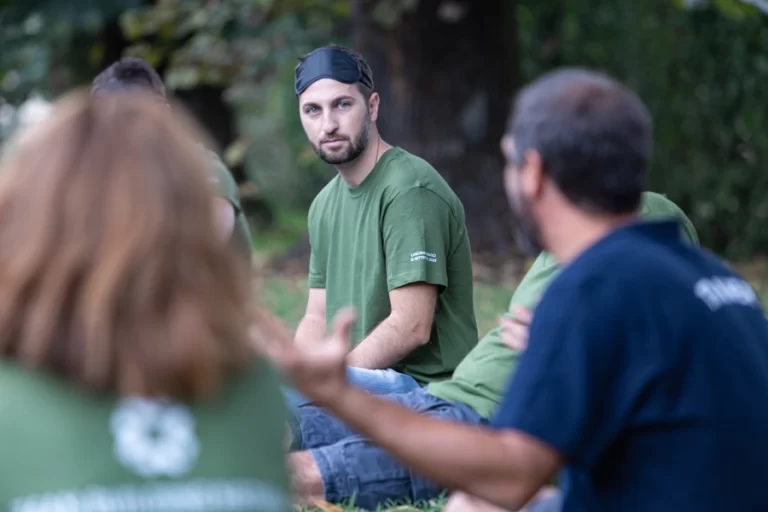
When we invite team members to slow down, create space, and open themselves to listening, we are actually creating the conditions for them to observe what is happening within themselves.
Direct Experience
Through direct experience, they learn to recognize their behaviors and identify the mental models behind them. They become aware of the automatic patterns they can choose to work on—improving both themselves and their impact within the team.
Or, in some cases, growing as leaders.
In this way, they gain a real opportunity to take the first step toward meaningful change—one that can generate lasting and positive results over time.
A Deeper Exploration Coming Soon
As we have seen, becoming aware of one’s mental models is only the beginning of a change process that requires time, determination, commitment, and support.
It is a complex journey, often marked by hidden challenges, obstacles, and resistance.
For this reason, we have decided to explore the topic of behavior change further in a second article, where we will dive deeper into key questions:
What can hinder behavioral change?
What factors can support it?
And how can the Team Building Natura® experience effectively support your team throughout this process?
These are the questions we will address in the coming weeks.