Sommario
A Differentiating Factor
We are increasingly aware that focusing exclusively on analyzing and improving individual performance is no longer sufficient to ensure the achievement of goals and milestones—or, more broadly, to build a winning team.
The environment in which companies operate is becoming increasingly complex, fast-paced, and constantly evolving. Barriers between departments are gradually dissolving. The need to share information in real time and create strong connections is growing. People are progressively adapting to working in cross-functional teams. In this context, teamwork inevitably becomes an increasingly differentiating factor for any successful organization.
Working in Teams
A tangible need, also supported by data, as highlighted in this Harvard Business Review article: over the past two decades, the time managers and employees spend on collaborative activities has increased by more than 50%.
In many industries, working in teams leads to better outcomes—particularly in areas such as innovation, problem identification, and the search for new solutions. Teamwork has become a fundamental capability for any organization that aims to compete successfully in the global marketplace.
Building a winning team is therefore an essential priority for any company—but where should you begin?

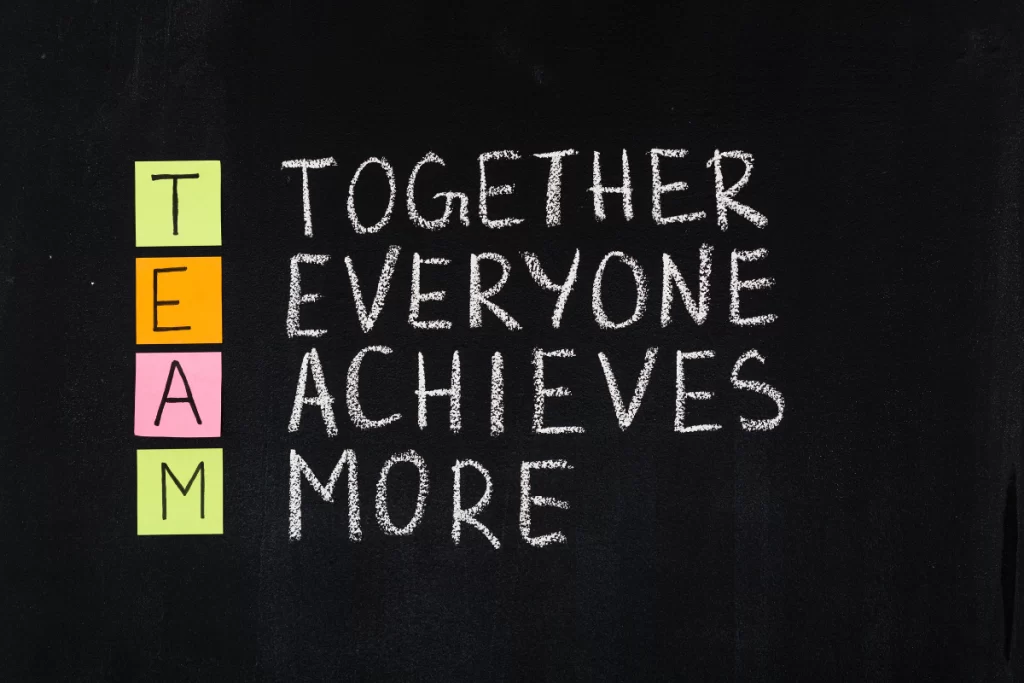
Project Aristotle
The first step is undoubtedly to identify the factors that determine team success.
What lies at the foundation of a successful team? Shared interests or recognition? A particular leadership style? A certain degree of familiarity and social connection among team members?
In 2013, Google launched Project Aristotle, involving hundreds of teams with the goal of understanding what truly characterizes a successful team. The research findings were published the following year, but only later reached a broader audience through a New York Times article. A thought-provoking piece that helps illustrate the complexity of the topic explored in Project Aristotle and the many dynamics involved.

Four Key Factors
In line with the vast majority of existing literature, Google initially assumed that the ingredients necessary to build a successful team were intuitive and relatively obvious: young talent, outstanding professionals, experienced managers, and unlimited resources. What they did not anticipate was how far this assumption was from reality.
The Unexpected Outcome
The answer that emerged from the study conducted by Julia Rozovsky and her team within Project Aristotle was very different from what anyone might have expected. Data and insights gathered over more than a year of analysis across 180 Google teams led to the identification of four key factors:
- Dependability: Team members meet deadlines and deliver work at the level of excellence required by Google.
- Structure and Clarity: Roles, plans, and objectives within the team are clear and well defined.
- Meaning: Team members find a deep personal sense of meaning in their work.
- Impact: Team members perceive their work as important and capable of generating tangible change.
However, researchers knew that one essential ingredient was still missing in order to complete the formula for building a successful team. Identifying precisely which element was lacking proved to be an extremely challenging task, as the available data seemed contradictory and did not immediately lead to a definitive answer.
The Missing Ingredient
This is where a study on psychological safety by Amy C. Edmondson—published as early as 1999 by the Johnson Graduate School of Management at Cornell University—came into play. Thanks to Edmondson’s research, Julia Rozovsky’s team was able to identify the final ingredient necessary for building a successful team: psychological safety.
Within a team context, psychological safety is defined as the shared belief that it is safe to take risks and be vulnerable in front of others without fear of negative consequences. This condition necessarily involves trust—not merely interpersonal trust, but the creation of a climate of mutual respect and confidence in which everyone feels free to express their uniqueness.
During her research, Amy Edmondson identified a strong correlation between psychological safety, learning, and team performance, uncovering group dynamics that captured the attention of Google’s research team. At last, Julia Rozovsky and her colleagues had found the missing piece of the puzzle—the most critical one of all.
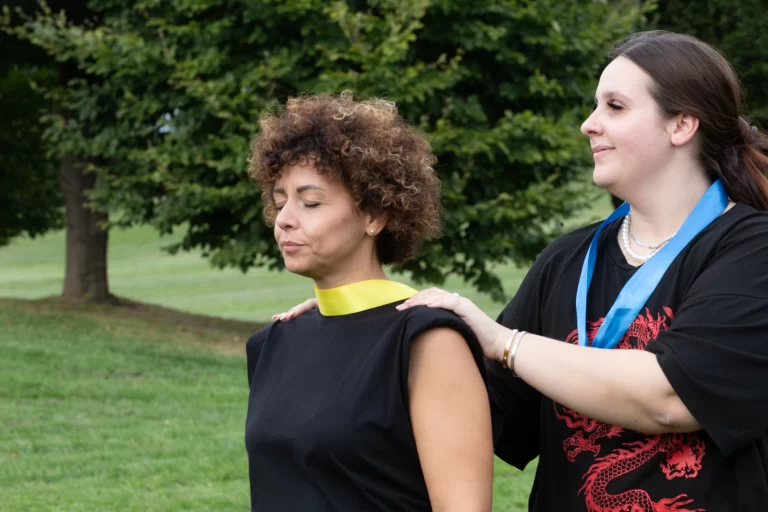
Why Cultivating an Environment of Trust and Psychological Safety Matters
Psychological safety was therefore added to the four previously identified key factors, becoming the most important attribute according to Google’s study. In essence, it was the critical factor that truly unified all successful teams.
But why does psychological safety exert such a powerful influence on a team’s success?
Simply because cultivating an environment of trust and psychological safety creates the right conditions to foster dynamics that are fundamental for corporate teams, such as:
- Encouraging an attitude oriented toward individual and collective learning, including the development of a constructive approach to mistakes.
- Developing a continuous improvement mindset and learning to use feedback as a tool for growth and development.
- Stimulating accountability among all team members, supporting the effective use of essential management tools such as delegation.
- Promoting modern and innovative leadership models, such as distributed leadership, where each individual is called to cultivate personal growth while actively contributing to shared objectives.
- Viewing diversity as a valuable asset for the organization.
- Developing innovative solutions and ideas through a creative process that leverages both individual uniqueness and the strength of teamwork.

Key Behaviors
If this is the case, what key behaviors should we invest in to truly build an environment of psychological safety?
Psychological safety emerges when we begin to establish authentic relationships with other team members. When real connections are formed among people who share a common culture and collective goals. When we start accepting ourselves and others as we are—without prejudice. When we learn to acknowledge and welcome our own and others’ emotions, creating a space for sincere dialogue that allows every team member to express their perspective. When we stop seeing one another merely as colleagues and begin relating to each other as human beings—aware that each of us carries a personal history into every interaction.
Communication, emotional intelligence, and empathy play a fundamental role in this process. As Matt Sakaguchi noted in the New York Times article on Project Aristotle, inviting teams to adopt an emotionally aware conversational model can make a significant difference when the goal is to create an environment of psychological safety—one in which everyone feels free to contribute their uniqueness.
The Human Component
The human dimension is therefore the true protagonist in building psychological safety within a team. If we aim to create a successful team, we must invest in the development of inherently human qualities and capabilities..
Today, many ideas, solutions, and initiatives can support companies in pursuing this objective. We firmly believe that Team Building Natura® represents an ideal alternative for strengthening and enhancing human relationships and connections—essential foundations for building high-performing teams.
The 5 principles and philosophy that inspire our outdoor corporate team building proposal are specifically designed to cultivate these dimensions within organizations, supporting individuals and teams in their growth and development journeys. Through direct experiential learning, we help team members generate new awareness that can be transferred into their daily work routines. Through our Nature-based formats, we design tailor-made programs aligned with your organization’s specific needs.

We Are Here to Support You
Team success is never accidental; it is the result of authentic and solid relationships built over time through conscious choices. Cultivating an environment of trust and psychological safety is one of those choices. It means recognizing that every individual brings unique value to the team and creating the conditions for that value to be fully expressed.
It is not only about improving performance or achieving new milestones, but about transforming the way people work together, day after day.
If you would like to foster these dimensions within your organization, we are here—ready to support you on this journey. Contact us to schedule an introductory call. We will be pleased to listen to your needs and design the most suitable path for your team.