Sommario
The Latest Addition to Team Building Natura®
We have reached the final stage of our journey through Team Building Natura® formats.
In this article, we invite you to discover The Growing Path, the most recent format we have developed within the Team Building Natura® project.
It was created to support individuals and teams in their individual and collective development, helping them grow over time.
Rather than a single experience, it offers structured development pathways that can combine experiential team building, workshops, individual and group sessions, and a range of other tools to guide the team, step by step, toward its desired objectives.
Case study
How often does an ambitious corporate project that starts with the best intentions gradually lose momentum?
This is a common situation in organizations, particularly with projects involving company culture, which require commitment, consistency, and determination.
It is precisely this kind of situation that gave rise to the case study we have chosen to explore The Growing Path format.
Context
Through a cross-functional, bottom-up project, the company had developed a new values charter to embed a particular company culture.
The initiative had been welcomed with great enthusiasm at every level, generating participation and engagement from the outset. The values underpinning the company culture had even been integrated into the employee appraisal system, demonstrating the project’s central role. From the beginning, people identified with this new company culture, which they had helped create.
Within a relatively short time, however, things had changed. A change in senior leadership, with the arrival of a new CEO more focused on performance and results, had contributed to a gradual loss of focus on the values charter, pushing it to the margins of organizational life.
Day by day, this shift had begun to generate dissatisfaction, mistrust, and disengagement, alongside a sense of resignation, helplessness, and frustration. These feelings were largely linked to the growing gap between the stated values and what people actually experienced in their daily working lives.
Objectives
At that point, relaunching the project meant more than simply talking about values again. It required investment in credibility, trust, and participation.
Although ambitious, the objective was clear from the outset: give the values charter fresh momentum and gradually restore its place at the heart of organizational life.
The real question, however, was different. How could we design a project that would actually achieve this?
We knew we would need to involve the entire workforce. At the same time, we were aware that the senior management team would play a decisive role in the initiative’s success.
We shared these reflections with the HR team and worked together to develop a comprehensive project that integrated our work with a series of parallel initiatives managed independently by HR.
This was a challenge within the challenge: building one coherent project in which the different initiatives could work together toward the same ultimate objective.
The Team Building Natura® Proposal
The starting situation was complicated, to say the least, and in some respects critical.
People had believed in the original project, helped create the values charter, and committed to embedding a new company culture. Then they had watched the initiative gradually lose momentum until it had almost faded away.
The result?
Engaging them again would not be easy. Announcements or a dedicated event would not be enough. First, we needed to openly acknowledge what had not worked, re-establish authentic dialogue with the entire workforce, and regain their trust.
From our perspective, involving the senior management team was essential. Through their leadership styles, managers could send a clear signal that something was genuinely changing, translating values into visible and consistent behaviors across the organization.
These considerations shaped a project built around successive stages over a medium-term timeframe.
An Eight-Step Development Pathway
The project consisted of eight successive steps, designed to guide the organization gradually through the entire process.
- Preliminary analysis. Assessment of the starting situation and an initial anonymous survey, based on specific KPIs identified with the HR team.
- Project Presentation. Opening the development pathway with a plenary session to introduce objectives and the timeline, share the initial survey findings, and revisit the values charter.
- Team Building | Managers. Two days of experiential team building in Nature to explore the company values in depth and identify at least one behavior change for each participant.
- Executive & Leadership Coaching | Managers. A 360° assessment and individual coaching pathways to work in depth on the behaviors identified.
- Group Session | Manager. A discussion to review progress and obstacles and determine any next steps.
- Team Building | Entire Workforce Three days of experiential team building in Nature for the entire workforce, to explore and experience the company values in practice.
- Evaluation Survey. A second anonymous survey using the same initial KPIs to compare results and measure progress.
- Project Conclusion. Closing the development pathway with a plenary session to reflect on the journey, celebrate achievements, and renew commitment to the company values.
Involving the Entire Organization
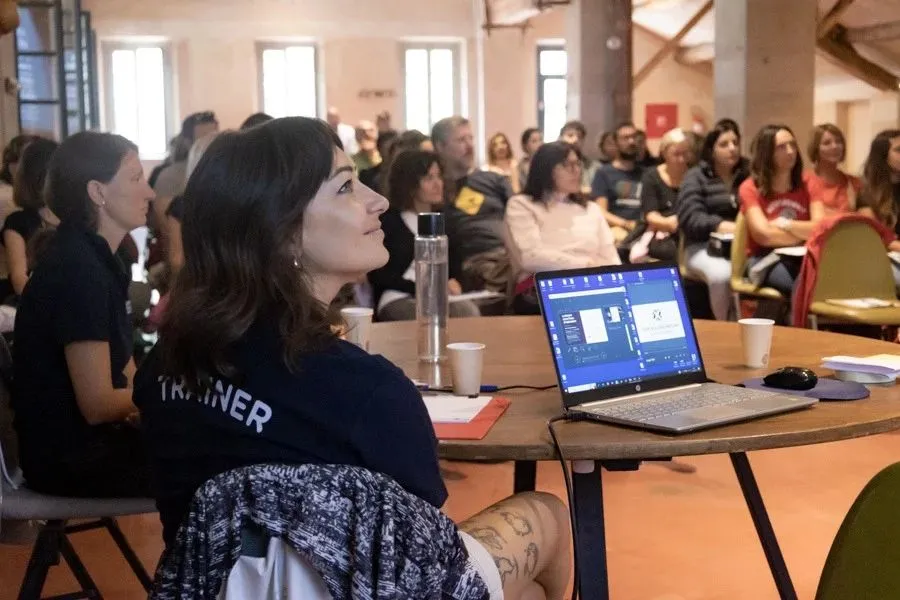
From the outset, we wanted the entire workforce to clearly understand the genuine commitment to giving the values charter fresh momentum. This was one reason why we chose to launch the development pathway at one of the two annual meetings that brought the whole organization together.
It was an important opportunity to openly acknowledge what had not worked, share the initial survey findings, and present the project’s objectives and agenda. It also conveyed a clear message: the project reflected a firm commitment from the company’s owners, and our work was part of a shared vision.
The same setting would be used at the end of the project, bringing the whole organization together again to reflect on the journey, share and celebrate progress, and renew commitment to the company values.
Working with the Senior Management Team
Before involving the rest of the workforce, however, we needed to focus on the senior management team. Through their leadership styles, behaviors, and everyday choices, managers were the ones who could make the first concrete signs of change visible.
Taking a different approach would only have risked widening the gap between the stated values and the reality perceived by the rest of the workforce.
We therefore planned an initial two-day experiential team building program in Nature, designed to explore the company values in depth and help each manager identify at least one behavior change on which to focus their efforts.
A 360° assessment and individual Executive & Leadership Coaching pathways would then enable each manager to work in depth on the behaviors they had identified during the outdoor team building experience.
Finally, a Group Session for the senior management team would allow them to discuss their progress, the obstacles they had encountered, and further actions to take, including the possible continuation of their individual Executive & Leadership Coaching pathways.
Engaging the Workforce
At that point, we would be ready to involve the rest of the organization.
Divided into groups, the entire workforce would take part in experiential team building days in Nature dedicated to the values charter. The aim was not simply to learn or recall the values, but to explore them through direct experience, discussion, and sharing, gradually connecting them to everyday working life.
The timing was deliberate.
By the time we entered this new phase of the project, managers would have completed their individual development pathways, and the first changes could already be visible. Words would begin to be backed by actions, creating much more favorable conditions for rebuilding trust and restoring credibility to the values charter.
Results Achieved
Although our work formed part of a broader project managed directly by the HR team, looking back we can recognize that some of the decisions made during the design phase proved decisive.
In particular, gradually involving the entire workforce, using different approaches and areas of focus, made a significant contribution to achieving the original objective we had set.
Our most important achievement was helping rebuild trust in the values charter, restoring its place at the heart of organizational life and giving it fresh momentum. This was made possible by the willingness of the entire workforce, particularly the senior management team, and the continued support of the company’s owners.
It was undoubtedly a complex challenge. For that very reason, we had planned ongoing dialogue with the HR team, honest discussions, and regular feedback. This allowed us to monitor progress, identify obstacles, and make the necessary adjustments along the way, while staying focused on the shared objective.
Embedding a company culture is, indeed, an infinite game. Today, we can be proud of having contributed to the company’s journey, supporting it through a delicate phase within a process that will continue over time.
When to Choose The Growing Path
Some objectives cannot be achieved through a single experience. They require consistency, commitment, and a clear methodology. Supporting the development and growth of individuals, teams, and cross-functional groups calls for structured development pathways that unfold over time, engaging both the individual and collective dimensions.
The Growing Path was created to support your company through these development journeys, combining experiential team building or workshops, individual and group sessions, coaching, assessments, and other tools that help you move in the desired direction. Goals and KPIs are defined together with the company, while checkpoints and discussions along the way help monitor progress and adapt the project as it unfolds.
The eight steps described in our case study are not a standard structure for The Growing Path format. They are just one of countless possibilities: our project design in response to a specific need.
This illustrates the deeply tailor-made nature of The Growing Path. Every project takes shape around real situations and concrete needs, creating development pathways that support individuals, teams, and organizations over time, in the direction we have chosen together.
The End of One Journey Is the Beginning of the Next
Our journey through Team Building Natura® formats ends here, with this final article in the series dedicated to The Growing Path. But, as often happens, every ending holds the possibility of a new beginning. That is what we hope will happen this time, too.
Whenever we meet a new company, a new team, and new challenges to address, a new journey begins for us.
Natural Team Connection, Nature Inspired Learning, and The Growing Path are three different formats with one underlying philosophy: putting people back at the center and embracing the human dimension within organizations. We do this through tailor-made projects designed to meet your needs and guide you toward your desired goals.
Now it is up to you to choose where to begin.
If you missed the previous articles, you will find direct links below to revisit the whole series and discover Team Building Natura® formats through real case studies: