Sommario
- 1 Leadership Today
- 2 A Particular Leadership Style
- 3 The Art of Self-Leadership
- 4 A Fundamental Component
- 5 Developing Inherently Human Capabilities
- 6 Cultivating the Right Mindset
- 7 Self-Leadership as a Starting Point
- 8 A Corporate Culture Oriented Toward Self-Leadership
- 9 Today’s and Tomorrow’s Talents
- 10 Our Experience in Leadership
- 11 Learn More
Leadership Today
What does it mean to be a leader today? And what qualities should a true leader embody?
Seemingly simple questions, yet no longer easy to answer with certainty. Leadership has become an increasingly complex and evolving discipline, as evidenced by the countless models now available, each with its own distinctive characteristics and focus.
To name just a few, we can refer to transactional leadership, focused on efficiency and goal achievement. Transformational leadership, which inspires change and growth. Servant leadership, where the leader acts as a facilitator in service of the team. Or authentic leadership, centered on coherence and personal values.
We can also consider more recent approaches, such as agile leadership, promoting flexibility and adaptability; empathetic leadership, focused on listening and understanding; and ethical leadership, grounded in responsibility and concern for collective well-being.
A Truly Intricate Jungle
Each model highlights specific qualities of leadership, perhaps finding its rationale within different organizational contexts. But how can we navigate what increasingly resembles a truly intricate jungle? Is it possible that all these leadership styles can coexist?
These reflections led us to consider the need to return to the essence of the matter, setting aside unnecessary complexity and viewing leadership as something more fundamental and natural. We reflected on how the qualities distinguishing each leadership style actually coexist—albeit in different proportions—within the mindset of a true leader, influencing one another.
This led us to identify what we believe to be a common denominator capable of uniting any leadership model: a key factor upon which one can build their leadership.

A Particular Leadership Style
Before revealing this key factor, however, we would like to focus on a specific leadership model not yet mentioned, which helps clarify our perspective: distributed leadership.
First introduced in the early 2000s by British researcher James P. Spillane, this model stands apart from others. In this case, leadership does not reside in a single individual but is distributed equally among all team members.
According to their role, skills, and personal qualities, each individual is called upon to step forward—making decisions and assuming responsibility while cultivating both personal and collective growth. Everyone contributes to achieving shared objectives, while progressively developing greater self-awareness and becoming a point of reference for themselves and others.
An interesting concept, indeed.
However, for distributed leadership to truly function, there is a fundamental prerequisite that cannot be overlooked: each individual must first learn to lead themselves.
This is where the concept of self-leadership comes into play—the key factor we mentioned earlier. A foundational condition upon which any form of leadership can be built and which, through the principles of Team Building Natura®, can be developed in a tangible and practical way.

The Art of Self-Leadership
But what do we mean by self-leadership? And why is it so crucial?
“Know thyself” was inscribed on the Temple of Delphi dedicated to Apollo. A phrase later made famous by Socrates, and one we can borrow today to describe self-leadership: the art of learning to lead oneself.
Leading oneself means, first and foremost, learning to truly know oneself. It requires the courage to explore deeply who we are, the values that guide us, and the resources and capabilities we possess. It is a journey that invites us to recognize our strengths and accept our weaknesses, uncovering mental patterns and limiting beliefs that often shape our behavior.
Self-Listening as a Leadership Skill
In this sense, self-leadership means learning to listen to oneself. Observing carefully our stream of thoughts, our emotions, and the signals constantly transmitted by our body—signals we often ignore despite their valuable guidance.
Developing self-leadership also means defining with clarity the goals that truly matter to us and identifying the most effective path to pursue them. It means navigating difficulties while maintaining a steady course, even through life’s most challenging storms. It is an ongoing exercise in self-trust—trust in our choices and in our capacity to evolve.
Letting Go of Judgment
Self-leadership is acceptance. It means suspending judgment, granting ourselves permission to make mistakes, and transforming each error into a learning opportunity. It involves caring for oneself while remaining focused on personal growth and evolution, fully aware that the path will include both successes and setbacks. It is the process through which we become our own strongest ally, nurturing the curiosity necessary to continue exploring, experimenting, and growing.
This is what we mean by self-leadership: a crucial theme for every individual, in every area of life—especially within organizations, where this capability directly impacts the quality of leadership and the ability to empower others.

A Fundamental Component
Understood in this way, self-leadership becomes a fundamental component of any company’s success.
Can you imagine the impact that fostering a culture oriented toward self-leadership could have within an organization?
First, it would strengthen our ability to truly listen. A comprehensive form of listening, initially directed toward ourselves and subsequently toward others and the surrounding environment. A skill that enables us to expand our “map of the territory” and interpret situations with greater clarity. It equips us to navigate the complexities of the VUCA world with agility, identifying new solutions and opportunities where previously we might not have looked.
Emotional Intelligence and Empathy
Developing self-leadership also encourages the activation of emotional intelligence and empathy. In doing so, we attribute deeper meaning to daily experiences, improving the quality of our decisions. Our ability to communicate effectively increases, and we are naturally inclined to cultivate authentic and sincere relationships that support the achievement of goals and milestones.
Trust and Psychological Safety
Listening, emotional intelligence, and empathy are also the pillars upon which an environment of trust and psychological safety can be built—an essential feature of every successful team. Such an environment creates the ideal space to introduce key principles for team development, including a constructive approach to mistakes, meaningful feedback, and effective delegation. It becomes fertile ground for nurturing belonging, openness, and collaboration—even across departments.
Imagine a context in which everyone can express themselves freely, bringing creativity, ideas, and fresh perspectives—essential elements for solving problems and identifying solutions. A context that values each individual, enabling them to reach their full potential and become a genuine added value for the team and the organization.
Developing Inherently Human Capabilities
Through self-leadership, we develop inherently human capabilities that support both personal and professional growth, significantly enhancing performance and results in every area of life, including business.
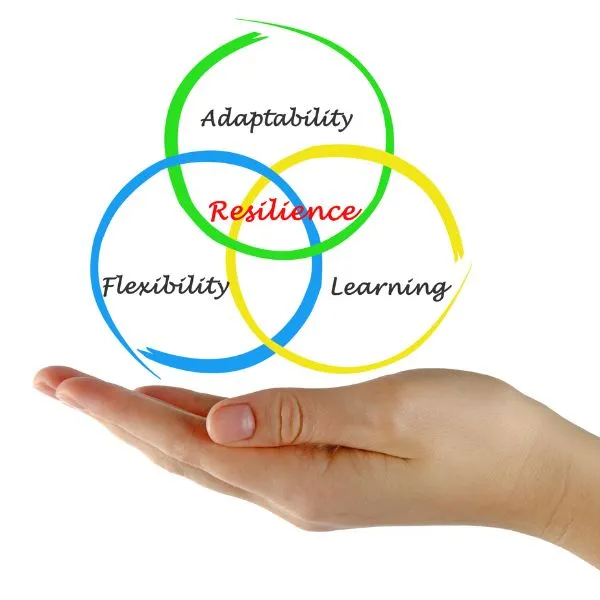
Qualities such as listening, emotional intelligence, empathy, trust, and creativity are not merely soft skills; they are true strategic levers worth investing in to strengthen team cohesion and ensure greater adaptability, resilience, and the ability to successfully manage change.
The 5 Team Building Natura® Principles
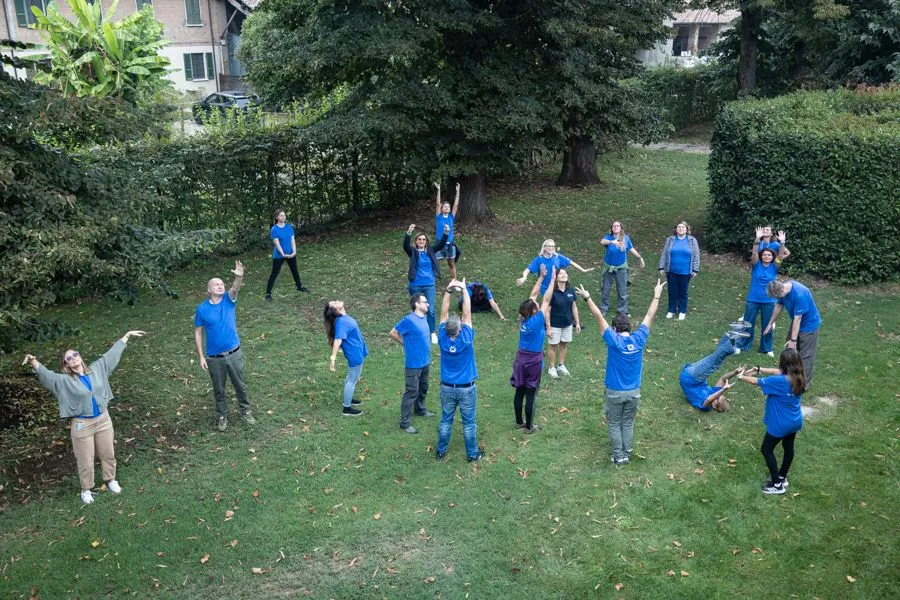
It is therefore inevitable to draw a parallel with the five principles underlying Team Building Natura®, which—through a unique and innovative outdoor team building proposal—actively foster the development of these capabilities, generating a tangible impact on both teams and organizations as a whole.
Not by chance, our experiential formats Nature Inspired Learning and The Growing Path are particularly suited to addressing key themes such as leadership and self-leadership. In particular, The Growing Path is a structured development journey that, step by step, guides your team members toward individual and collective growth, transforming each experience into a learning opportunity.
Cultivating the Right Mindset
Despite the extraordinary benefits that developing self-leadership can generate within a corporate team, we are fully aware that it is not a simple or immediate path.
It requires cultivating, day after day, a growth-oriented and continuous learning mindset. It demands determination and commitment to overcome obstacles, resistances (including cultural ones), mental models, limiting beliefs, and prejudices. It means questioning oneself and gaining full awareness of both strengths and weaknesses, as well as the intrinsic resources available to us.
A Challenging Path
A challenging journey, certainly—but also an inevitable step for anyone aspiring to be a true leader, regardless of the leadership style adopted. For those who wish to inspire their teams. For those committed to supporting others in their development, fully aware that we cannot guide someone where we have not been ourselves. And this naturally applies within organizational contexts as well.
In an era characterized by the proliferation of numerous leadership models—and where sustainability, people-centricity, diversity, inclusion, and similar themes are frequently discussed—how can we still question the importance of self-leadership, particularly for key organizational roles?
Self-Leadership as a Starting Point
Adopting any leadership model does not simply mean understanding theoretical frameworks, learning techniques, or applying specific concepts. Embracing a particular style does not merely mean developing one quality over another.
Leadership is not a checklist of rules to apply. It must be lived and experienced. This experience unfolds in our daily lives, where, step by step, we build our leadership through firsthand experiences.
The Case of Empathetic Leadership
If I am not accustomed to genuinely listening to what moves within me, how can I adopt a leadership style based on listening to others? If I have not learned to connect with my own emotions without being overwhelmed by them, how can I consciously welcome those of others?
On the contrary, consistently cultivating a listening-oriented mindset—starting with oneself—naturally opens the door to authentic listening toward others. Emotional intelligence becomes activated as moments of connection with our own emotions increase. In turn, understanding others’ emotions becomes easier, and empathy arises naturally. Over time, we begin attributing broader meaning to our experiences, sometimes even transforming our perception of reality itself.
We develop new awareness regarding aspects of ourselves that may have previously gone unnoticed. We are called to integrate this awareness into every area of life—possibly redefining goals, priorities, behaviors, and ways of acting to align with our discoveries. And inevitably, this way of being reflects in our relationships, including professional ones.
Leadership Is Not a Mask
These considerations apply to any leadership model, all of which inevitably entail personal growth and evolution. Leadership is not a mask we can wear at will; it is part of our unique life journey.
For this reason, we are convinced that self-leadership—understood as cultivating one’s growth from a human perspective—is the common denominator of any leadership model we choose to embrace. It is where everything begins.

A Corporate Culture Oriented Toward Self-Leadership
From this perspective, leadership—and particularly self-leadership—concerns everyone, without exception. In this sense, distributed leadership appears to us as one of the most current and visionary approaches.
However, implementing such a culture within an organization requires a starting point.
So where should we begin?
One perspective suggests starting with managerial positions—individuals who, through the development of self-leadership, can become agents of change and facilitate the diffusion of a specific corporate culture. Board members, managers, and team leaders have the opportunity to guide their teams in developing self-leadership—provided they have embarked on this journey themselves.
On the other hand, developing self-leadership means generating new awareness—a phenomenon we could define as entropic, naturally expanding over time without regression. Like the universe, human awareness expands, diversifies, and becomes increasingly rooted, forming a stronger foundation for further evolution. For this reason, another possible strategy would be to start from the bottom—or from middle management—gradually creating a base of awareness capable of spreading throughout the organization.
Between the two approaches, perhaps our more romantic side would choose the latter, while our more pragmatic side might favor the former.
The Core of the Matter
In any case, there are multiple pathways to fostering a corporate culture oriented toward self-leadership.
The fundamental issue, in our view, is recognizing the difference between talking about leadership—often reduced to a set of competencies or roles—and its most authentic meaning: the external manifestation of a personal evolutionary journey. True leadership is the reflection of inner growth, expressed through the achievement of goals and the ability to manage relationships consciously and authentically. Ultimately, each person will define leadership in their own way, prioritizing certain qualities over others. Yet only those who have developed solid self-leadership will be able to interpret it authentically and with full awareness.
Today’s and Tomorrow’s Talents
These reflections on leadership and self-leadership inevitably lead us to another crucial topic: talent.
Attracting, developing, engaging, and retaining talent represent daily challenges for any organization. HR departments continuously seek effective strategies to attract young talent and ensure long-term engagement.
In this context, self-leadership can represent a significant opportunity. Offering younger generations the possibility to embark on a journey of personal and professional growth within the company—developing skills such as listening, emotional intelligence, and empathy—can become a powerful lever for attraction and retention. Many young professionals seek deeper purpose, opportunities for exploration, and meaningful fulfillment.
A Winning Strategy
Supporting them in developing self-leadership through continuous learning represents a win-win solution: for individuals, who cultivate growth and evolution; and for organizations, which benefit from sustained talent retention and tangible improvements in performance and results.
However, if we choose to invest in young talent as a strategic lever, we must not overlook the importance of involving senior professionals in a similar journey. Otherwise, we risk widening generational gaps and reinforcing divergent perspectives and approaches.

Our Experience in Leadership
We have been working in the field of leadership and self-leadership for many years. A journey that began long ago and, particularly through coaching, has enabled us to explore every aspect of personal and professional development.
It is a journey we have experienced firsthand—and continue to experience daily—facing the difficulties, resistance, and challenges typical of any evolutionary process. Over time, it has been enriched by the many individuals we have supported in their growth journeys, consistently integrating the personal and professional dimensions—two sides of the same coin.
Our extensive corporate experience, first as managers and later as consultants, has provided deep insight into organizational dynamics. Combined with our specialization in leadership coaching, this expertise allows us today to effectively support managers, professionals, and teams in their development paths.
A Powerful Ally
With the evolution of the Team Building Natura® project, we introduced Nature as a powerful source of inspiration and co-protagonist in these growth processes. A powerful ally that acts as a facilitator in the individual and collective development journeys we design for our clients.
Through our unique and innovative outdoor team building formats, we can address numerous objectives; however, leadership and self-leadership remain central themes for us. Through customized, high-impact programs, we support individuals in key organizational roles in becoming true leaders—first and foremost of themselves.
Learn More
We invite you to contact us if you would like to explore how we can support your organization on leadership and self-leadership topics. Our Nature-based outdoor team building formats are designed to meet your specific needs.
Choose Team Building Natura® to give your managers the opportunity to develop authentic leadership. Provide your talents with the tools to become tomorrow’s leaders. And secure a successful future for your organization.
We are ready to accompany you on this extraordinary growth journey. In the coming weeks, we will continue exploring leadership and self-leadership through new articles dedicated to specific topics, designed to inspire and provide fresh insights.
Together, we can cultivate a leadership truly capable of inspiring and transforming.