Sommario
Learning to Navigate the VUCA World
For more than three decades, the acronym VUCA—Volatility, Uncertainty, Complexity and Ambiguity—has been used by companies and organizations to describe the environment in which they operate. Over time, most of us have become increasingly familiar with this concept and its deeper meaning.
There is no doubt that volatility, uncertainty, complexity and ambiguity have shaped our era, influencing business decisions, strategies and organizational processes. At times, these conditions have challenged us significantly, confronting us with complex situations and difficult problems to solve.
An Opportunity for Growth
Yet, as with any meaningful challenge, learning to navigate the VUCA world has also generated important opportunities for growth—both for individuals and teams.
Over time, we have learned to adapt and move with change, developing resilience, flexibility and responsiveness. We have learned to remain present even in uncertain conditions, relying on our natural capacity for adaptation.
Gradually, this journey has also brought the human factor back to the center.
Successfully operating in a VUCA environment requires organizations to cultivate innate human capabilities such as listening, emotional intelligence and empathy. It means encouraging lateral thinking and adaptability, while building cohesive teams grounded in trust and psychological safety.
A Natural Evolution
However, over the past decade the context has continued to evolve.
In recent years, the acronym VUCA has started to feel insufficient to fully describe the environment we now face. Some thinkers have begun suggesting that it is time to move beyond it and adopt a perspective that better reflects the complexity of the world we live in today.
This is how the acronym BANI—Brittleness, Anxiety, Nonlinearity and Incomprehensibility—was introduced by futurist Jamais Cascio.
BANI does not replace VUCA. Instead, it complements it, offering a new lens through which we can understand the challenges of the present and the future.
Before exploring this concept further, however, it is worth getting to know its creator.

Who Is Jamais Cascio
For more than 30 years, Jamais Cascio has dedicated his work to exploring the future, imagining possible scenarios and sharing insights on how society can move toward more conscious and sustainable ways of living.
After earning a degree in history and anthropology, he completed a master’s degree in political science, specializing in international relations.
Throughout his career, he has worked in a wide range of fields—from information technology to the Hollywood film industry.
His background is diverse and multidisciplinary, as are his interests. In his analyses, Cascio successfully bridges humanistic, technological, environmental, political and organizational perspectives, creating a broad and integrated vision of the future.
The Story of a Forward-Thinking Mind
In the late 1990s, Jamais Cascio began collaborating with other leading thinkers in what he calls the “field of futures”—the study of possible future scenarios and transformations.
This journey led him to become one of the co-founders of worldchanging.com, one of the most influential international websites dedicated to green sustainability and building a more conscious world.
For several years, Cascio served as the site’s main author, publishing more than 2,500 articles in just three years—an extraordinary achievement.
Già all’epoca, i suoi contributi erano attenzionati con grande interesse dal team dell’Institute for the Future (IFTF), con il quale iniziò a collaborare qualche anno più tardi, intorno al 2006. Da allora, è stato coinvolto in moltissimi progetti dell’IFTF, ritagliandosi l’opportunità di iniziare a pensare davvero in grande.
Want to Learn More?
There is much more to say about Jamais Cascio and his work.
If you would like to learn more about him, we invite you to visit his LinkedIn profile or explore his personal page on the Institute for the Future website.
And if curiosity leads you further, you can easily discover online the many ideas and insights he has shared through his publications over the years.


The Origins of BANI
Like many other thinkers, Jamais Cascio long recognized the usefulness of the VUCA concept, originally coined in the late 1980s within the military context and later widely adopted in organizational thinking.
He understood that VUCA had become a central element of strategic thinking in modern organizations.
In fact, Cascio often used the phrase “We eat VUCA for breakfast” during his talks to emphasize how deeply embedded the concept had become in everyday life.
Why VUCA Is No Longer Enough
In 2018, while delivering an important talk on anarchy and chaos, Cascio realized how difficult it had become to define what VUCA truly represented.
He began reflecting on how the term no longer fully captured the complexity of the environment we live in today, nor did it adequately describe the human experience in response to rapid change and instability.
This insight led him to consider the need for a new framework capable of better describing the challenges of the present and the coming decade.
From these reflections, the concept of BANI emerged.
Its purpose is not to replace VUCA, but to expand and complement it, creating a more complete framework for understanding our rapidly evolving world.

What BANI Means
Before sharing an insightful interview with Jamais Cascio conducted by Aidan McCullen, let us explore the meaning of each letter of the BANI acronym.
Brittleness
The letter B stands for Brittleness, referring to structural or systemic fragility.
Cascio uses this concept to describe systems that appear solid and efficient but collapse abruptly when exposed to unexpected shocks.
In a business context, a clear example could be a global supply chain that seems perfectly optimized yet suddenly breaks down when confronted with unexpected disruptions—such as those experienced during the COVID-19 pandemic in 2020.
According to Cascio, the response to brittleness is resilience—the ability to respond effectively to shocks and significant challenges.
In BANI terms, this quality is often described as Bendability: the capacity to adapt, to bend without breaking.
Anxiety
The letter A represents Anxiety, an increasingly widespread emotional condition in today’s world.
This anxiety goes beyond simple uncertainty. It reflects a deeper sense of difficulty imagining the future, finding one’s place in the world, or identifying desirable opportunities.
Cascio notes that this feeling is particularly widespread among Generation Z and Millennials, though it can be observed across many demographics.
It may manifest in different ways—fear, frustration, anger, resignation or even depression.
The response to anxiety, according to Cascio, lies in empathy.
In BANI terms, the key response is Acceptance—the ability to recognize and embrace the experiences and emotions of others.


Nonlinearity
The third letter refers to Nonlinearity, which Cascio explains through the concept of hysteresis, illustrating how cause-and-effect relationships in the BANI world are often misaligned, disproportionate or seemingly disconnected.
For example, organizations may invest significant effort and resources into a project only to see minimal results in the short term. Conversely, a small action can sometimes trigger large and immediate consequences.
To navigate this complexity, Cascio suggests we must learn to “abandon the script” and cultivate the ability to improvise.
This means learning to observe reality as it truly is—not as we assume it to be—while reflecting on past experiences with clarity and detachment.
In this context, improvisational thinking becomes a crucial skill: the ability to step outside established patterns, remain present and respond creatively to change.
The response to Nonlinearity is therefore Neuroplasticity—the brain’s ability to adapt, reorganize and evolve.
It represents a flexible and adaptive mindset, capable of changing form while continuing to move toward its goals.
Incomprehensibility
Finally, the letter I stands for Incomprehensibility.
This concept does not simply refer to understanding what is happening, but rather why it is happening.
Today we operate in a world where outcomes can appear unexpected, illogical or difficult to interpret.
In such a context, the most effective response lies in our ability to broaden our perspective.
We must recognize that, in a world that resists simple explanations, diverse viewpoints, dialogue, collaboration and shared insights become invaluable resources.
As Jamais Cascio reminds us, “many eyes can give you better perspective.”
For this reason, the response to Incomprehensibility within the BANI framework is Inclusiveness—embracing diversity, openness and collaborative thinking.
Team Building Natura® for Navigating VUCA and BANI
From our perspective, both VUCA and BANI describe a world where the human dimension plays an increasingly decisive role.
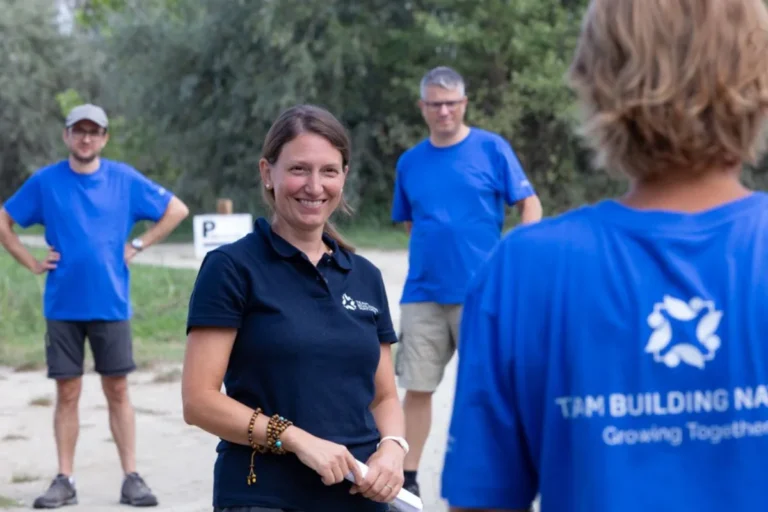
Through our Team Building Natura® experiences, we support organizations that choose to embrace these challenges and transform them into opportunities for growth.
Many of the themes highlighted by Jamais Cascio through the BANI framework are directly connected to our five core principles: Listening, Emotional Intelligence, Empathy, Trust and Creativity.
How Can We Support Your Team?
Through our outdoor team building programs and tailor-made development paths, we offer experiences that strengthen resilience and adaptability.
These are opportunities for teams to learn how to remain present, shift their focus away from mental noise and move beyond limiting beliefs, rigid mental models and unconscious biases.
As a result, team members learn how to regain balance in any situation, regardless of the challenges they may face.
They discover the power of deep listening, and how to activate emotional intelligence and empathy—essential capabilities for building authentic and meaningful relationships.
Within a safe space for experimentation, participants reconnect with trust in their innate abilities and rediscover the importance of flowing with life, understanding that while we cannot control external events, we can always choose how we respond to them.
Gradually, they develop deeper self-awareness, awareness of others and awareness of the environment around them. They learn to recognize themselves—and each other—first and foremost as human beings.
And There’s More
We guide team members to rediscover the deeper meaning of their role within the organization by aligning personal and corporate values, strengthening both purpose and sense of belonging.
We facilitate the creation of a healthy workplace environment focused on individual and collective well-being.
This becomes fertile ground for cultivating collaboration, trust and psychological safety.
We also support organizations in developing a truly inclusive culture, where each person feels free to express their uniqueness, perspective and contribution—generating value for the entire organization through new ideas and alternative viewpoints.
In this way, your team will be ready to navigate both VUCA and BANI with confidence.
They will be able to manage uncertainty, remain centered and draw on both individual and collective resources.
Creativity will become a strategic lever for moving toward success.


Let's Get in Touch
Through our Nature Inspired Learning and The Growing Path programs, we can design tailor-made development journeys that help your team cultivate greater awareness, resilience, flexibility and adaptability. These experiences help teams find their way even in the most uncertain and complex scenarios.
And these are only some of the topics we can explore together.
Every team is unique—with its own goals, dynamics and challenges.
Our role is to listen carefully, understand your needs and co-create the most suitable path together with you.
Discover whether Team Building Natura® is the right partner for your organization.
We would be delighted to meet you, hear your story and design an experience that is truly unique and unforgettable.